

Extreme Makeover: Rebuilding a Broken Outfield (Part 1)
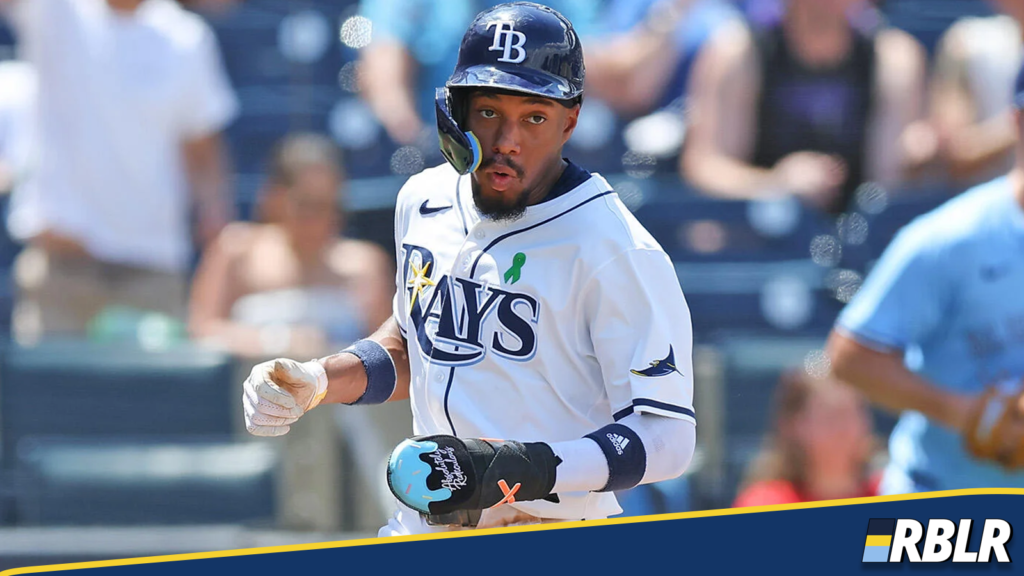
Entering this offseason, the Rays had a clear vision in mind when approaching their flurry of moves, and that was to turn over an anemic outfield group in a substantial way. In the 2025 campaign, Tampa Bay outfielders landed 26th in wRC+ (85 wRC+) and posted the worst ISO among major league clubs (.105).
The Rays made an extensive number of moves, saying goodbye to familiar faces Josh Lowe, Christopher Morel, and Kameron Misner. They also shed first-year Rays Everson Pereria, Jake Mangum, and Tristan Peters. The amount of turnover the Rays induced seems extreme, but you can’t blame them after the group’s lackluster 2025 season that ultimately held the team back.
Jake Fraley –
Originally drafted by the Rays in the 2016 MLB draft, Fraley made his way back to the organization via a waiver claim back in November. Fraley enters his eighth season, providing a much-needed veteran voice to a relatively young outfield group. The Rays will look to optimize and keep Fraley healthy, which has been a bit of a challenge in recent seasons as he landed on the IL 4 separate times last season.
Fraley provides the Rays with someone who has a very strong track record versus right-handed pitchers, posting a 112 wRC+ for his career. Jake gives the Rays outfield someone with plus plate skills, landing in the 60th percentile in chase% and landing similarly in Z-Contact%. Possibly due to injury, Fraley’s defense slipped from a player who netted the Reds +1 FRV to someone who this past season ended on -2.
Fraley gives the Rays a much-needed been-there, done-that presence and should raise the floor in the outfield significantly next season. The key will certainly be to try and keep him healthy, and the Rays are fortunate to have a plethora of different candidates that can platoon and spot Fraley at any given point.
Justyn Henry Malloy –
Malloy certainly appears to be looking on the outside looking in on the major league roster, but he has some unique skills that should be able to benefit the team. Acquired by Detroit in a small trade in January, Malloy comes over to Tampa Bay after struggling to find his footing in the Motor City. Justyn has a sterling minor league track record, never producing lower than a 127 wRC+, and will attempt to translate that this season in the Major Leagues.
The approach is rather passive from Malloy, falling in roughly the 5th percentile in overall swing% (40.5%). The low overall swing rate has allowed him to stay within the zone at a high rate, chasing just 19.8% of the time (~95th percentile). Malloy has had plenty of quality of contact and defensive issues that have prevented him from being a major league mainstay, posting a pretty pedestrian 31% hard hit%, and accumulating -4 OAA for his career. Malloy still has a valuable skillset that could help benefit a left-handed heavy Rays outfield group, and that’s the ability to mash vs southpaws. For his Major League career, Malloy has posted a 138 wRC+ vs left-handers, walking at a 17.6% clip, and even hitting for some power, posting a .173 ISO.
As of now, Justyn appears like nothing more than a short side platoon corner outfielder, which can still positively substantially impact the Rays as they finished 21st as a team vs left-handed pitching (85 wRC+). At the very least, Malloy still has 1 year of options, so this is easily plus depth, and I am excited to track his development.
Chandler Simpson –
The lone returner on part one, Simpson, enjoyed the highs and lows that come with being a rookie. Chandler was thrusted into the Major Leagues earlier than expected due to the Rays being ravaged with early-season injuries. Simpson did an honorable job in his first stint as a big leaguer, but still wasn’t a player you would want out there every day. Simpson’s first stint brought a lot of electrifying moments on the base paths as he went 19/22 on stolen base opportunities, but struggled to produce with the bat as he ran a 77 wRC+, and only walked at a 4.5% clip. A lot of the same defensive and pitch selection struggles sustained through his second stint, sustaining the measly 4.5% walk rate, and he continued to have defensive struggles.
Simpson has plenty of loud, projectable tools to get excited about going into the 2026 season. For starters, Simpson’s 94.1% Zone Contact% would have ranked 5th overall if he had qualified. His 6.5 BsR would have been 12th, and his 44 stolen bases tied him with Guardians 3rd baseman Jose Ramirez for 2nd. The minor league track record suggests that he can walk at a plus clip (9.4% MiLB career BB%), but the defense will always be the determining factor for Simpson being just a rotational bench player or a 3 WAR regular. His -5 OAA landed him in the 11th percentile, but he got easily plus jumps (+.3 feet above average), suggesting there is a reasonable path with added reps that he will get to his lofty defensive ceiling.
Simpson’s development is a big piece to the Rays puzzle of getting back to the postseason. His skill set is unlike any other in MLB and can be an impact contributor if his pitch selection and defense get cleaned up next season. The track record and under-the-hood defensive data suggest he can, so I am extremely hopeful he can tap into his lofty ceiling.
This first portion of the new look Rays outfield group is far more interesting to me than last year’s. An abundance of speed, bat-to-ball skills, and flexibility gives this group a bit of a throwback Rays outfield look, which I am excited to see. The competition also excites me as they have 7 legitimate candidates that will factor into this group (not including Palacios, Lux, or Vilade).


