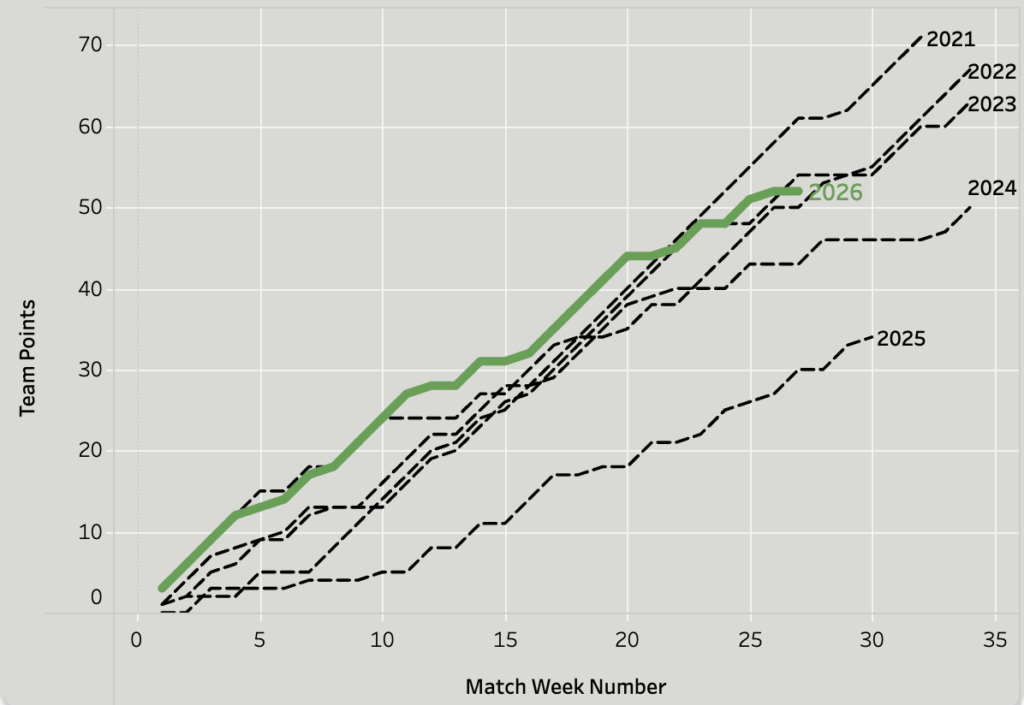
Winning the USL Championship Playoffs
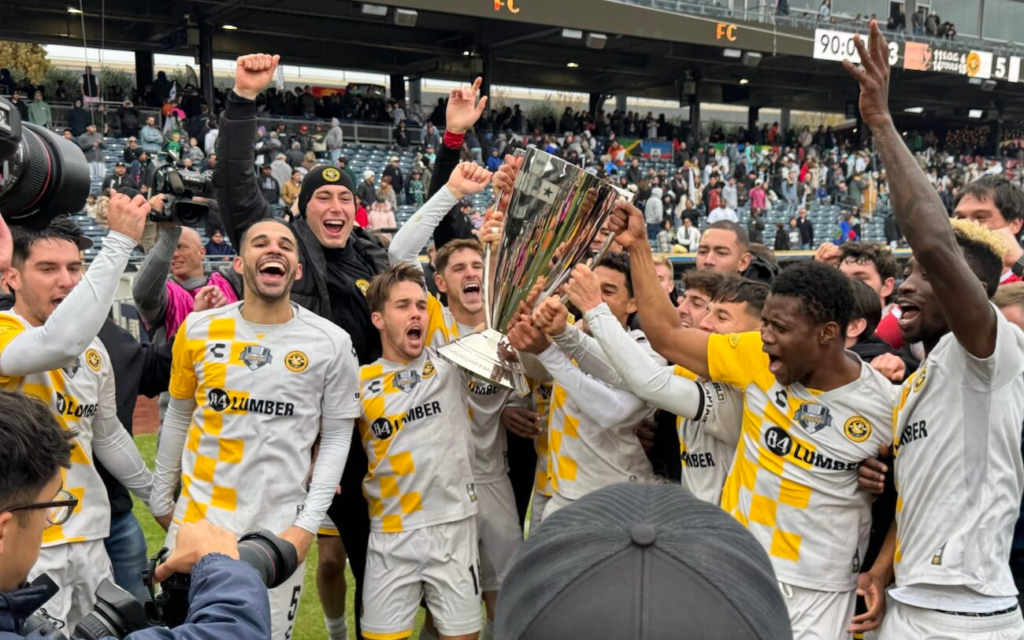
A few weeks ago I wrote about the makings of a USL Championship Player’s Shield winning team. Now, let’s take a journey through the USL Championship playoffs to help understand what factors determine which team gets crowned as the champion of the Championship.
A Brief Playoff History
Before we jump into the details, we will start with a brief history. As with our Player’s Shield exercise, we are looking at seasons dating back to 2017 because that aligns conveniently with when the Rowdies joined the USL and consistent data availability from fbref.com.
In the 9 completed seasons we have seen since 2017, 7 clubs have won the playoffs. Louisville City has been crowned champion twice in back to back seasons – 2017 and 2018 – and then have only managed Player’s Shield titles since. San Antonio was the only team to win both a Player’s Shield and Playoff Championship in a single season. And the Rowdies were deprived of a championship game matchup against Phoenix in 2020 which was cancelled due to a COVID-19 outbreak. I’m not bitter about that at all.
For a more Rowdies centric bit of history, the Rowdies have earned a playoff berth in all but two of their USL Championship seasons – the very fresh in my memory 2025 disappointment and their second season in the league back in 2018. The Rowdies are yet to win a USL Championship playoff title in their history but have finished as the runner up in 2021 to follow up their COVID year cancellation experience with another piece of disappointment.
What Does & Doesn’t Matter
While digging into the data I took a look at a number of factors and found that unfortunately, none of them have a significant correlation with the team that will win the playoffs. Now, that could be (and likely is) a result of limited data since we are really only able to look at 8 seasons of playoff data in this exercise. Or, it could be heavily influenced by the fact that anything can happen in the playoffs since they are a series of one-off matches.
The 2025 playoffs offer a great example of the latter, where the dominant Louisville City lost at home in the opening round to a Detroit City team that was just 3-points better off than the Rowdies in the regular season. And, in the same playoffs, Pittsburgh scored just one goal outside of penalty shootouts and nil-nill’d their way to shootout victories and an eventual championship.
Goals Scored vs Goals Conceded
Both regular season Goals Scored and Goals Conceded rankings are extremely weakly correlated with the ultimate playoff champion. And while we saw that a poorer regular season defensive performance was more easily compensated for in terms of a Player’s Shield champion than a poor offensive performance, it is difficult to distinguish a difference in impact between the two when looking at the playoffs.
Regular Season Win Streak Length
The thought process behind this factor was that in order to win the playoffs a team needs to win 4 games in a row, so if they haven’t been able to do that in the regular season – where they face even the poorest teams in the league – then they won’t truly have a shot at winning the playoffs. However, this too was extremely weak in correlation. To my surprise, 3 playoff champions have failed to hit the 4 game win streak threshold. Even more surprising, no team has had a regular season win streak longer than 6 games and gone on to win the playoffs.
Average Goal Margin
This is not entirely surprising given that neither goals scored or conceded metrics had much correlation individually. But, the average goal margin per game (goals scored – goals conceded) is pretty weakly correlated with identifying an eventual playoff champion. Interestingly, none of the 11 teams that sustained an average goal margin greater than or equal to 1 ended up winning the playoff title – for reference, through 5 matches the Rowdies have an average goal margin of 1.75.
Instead, 3 of 8 teams had an average goal margin less than 0.25 – these are teams that seem to have an ability to win tighter games and grind out results. 3 of 8 teams also maintained an average goal margin between 0.75 and 1 – these are strong but not dominant teams. And the remaining 2 of 8 teams fell between 0.25 and 0.75 on their average goal margin and would probably be categorized as solid teams.
Points per Game
Jumping up a bit in terms of correlation, a team’s regular season points per game does tend to set them up for a better chance of winning the playoffs. Looking at points per game instead of average goal margin helps normalize the impact of a team’s ability to win games regardless of if they are grinding out narrow victories or blowing teams out by multiple goals each week and improves correlation. This does help us tie regular season performance to playoff championship likelihood in an intuitive albeit still weak way.
Playoff Home Field Advantage
While we still see pretty weak correlations with this factor, the correlation also takes a bit of a jump up from others we have looked at so far. Across the playoffs, the team with the home field advantage wins 63% of the time compared to 46% of the time during the regular season. This is going to be influenced by seeding since the higher seeded team is given home field advantage for each round.
Interestingly, we do see the home field advantage gain strength across the in conference playoff rounds – moving from 61% in the Conference Quarterfinals to 66% in the Conference Semifinals and then 75% in the Conference Finals – before becoming a toss up in the Playoff Final.
End of Season Form
The strongest correlation we see across all of these factors is the team’s form as the reach the playoffs. Here we look at the percentage of available points the team earns in their final 5 regular season games and I think it does make sense intuitively that this would matter the most. As a team approaches a playoff run it becomes less about what they’ve done over the entirety of the season and more about if they are entering the post-season playing at their peak. Form here can be negatively influenced by the health of the roster or their strength of opponents or positively if the team’s end of season run-in is primarily at home.
Regardless of the reason for form, it does appear to be the most important and in our sample of data. There have been 2 teams that finished the regular season winning 5 of their last 5 games and both of those teams carried that form through the playoffs to win a championship.
Where that leaves us
While things are certainly less well defined for a playoff champion than a regular season champion, there are some things teams should aim for to put them in the best possible position to win the playoff title. To bring this back to the Rowdies, if they can end their final run of games against San Antonio (A), Miami (H), Indy Eleven (A), Detroit (H), and Sporting Jax (H) on a strong run and set themselves up for home field advantage across the rounds by finishing in the top 4 in the Eastern Conference they should have a strong chance to lift their first USL playoff championship in 2026.