RBLR Rays Weekly Roundtable – 8/3/26 – Freddy Peralta Trade!
While bigger names changed addresses elsewhere and bigger markets flexed their financial muscle, the Rays stuck to the math that’s kept them competitive for a decade and dared everyone to call it boring. Here’s how our roundtable is reading the moves and what’s still left on the board before the clock runs out on Deadline Day.
Sandy (@SandyAndTheRays): No Skubal, But Yes “Fastball Freddy”
Happy August — and, more importantly, August 3: trade deadline day. For Rays fans, this time of year usually means anxiety and a flurry of painful goodbyes. There are still a few hours left to see whether any fan favorites are on the move, though the weekend has already delivered plenty of big trades.
The biggest story was the Dodgers landing Tarik Skubal, arguably the most coveted player available at this year’s deadline. He now joins an already loaded pitching rotation, prompting the annual tradition of everyone who isn’t a Dodgers fan collectively asking, “Really?” Is anyone going to stop the Dodgers from three-peating? At times like this, it’s easy to see why a lockout seems increasingly inevitable.
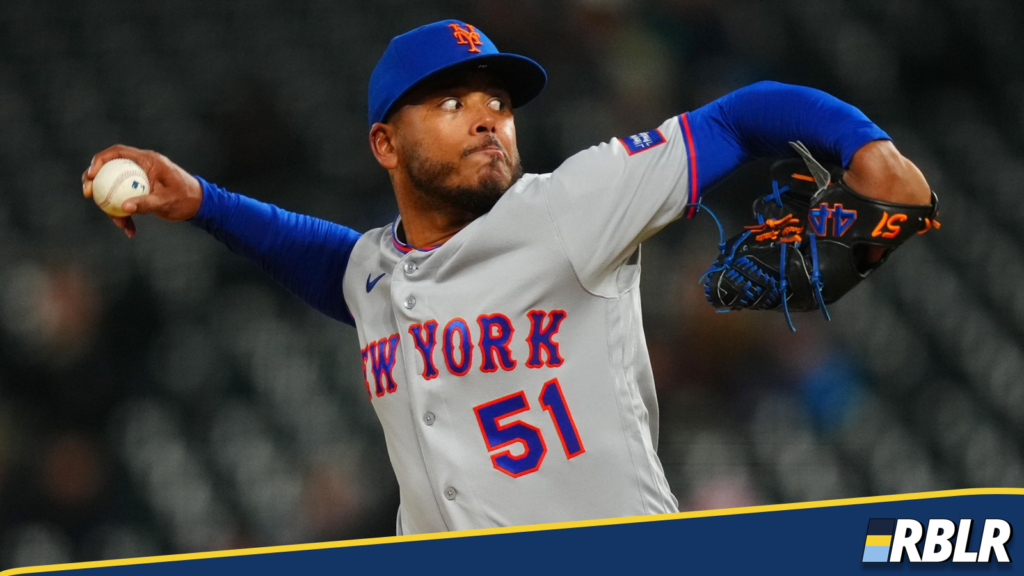
The Rays, meanwhile, missed out on Skubal but made a move of their own, acquiring veteran starter Freddy Peralta from the Mets. Despite a rough stretch in New York — he posted a 6.67 ERA over 11 starts from May 23 through July 20 — the Rays are clearly betting on his track record rather than his recent results.
“We’re excited to welcome Freddy Peralta to the Tampa Bay Rays,” president of baseball operations Erik Neander said. “Freddy is a proven major league starter with high-stakes experience and a strong track record.” New teammate Griffin Jax echoed that sentiment: “They call him Fastball Freddy. Anytime anybody with a good heater steps on this mound, it’s generally pretty favorable.”
Here’s hoping the Rays can help “Fastball Freddy” look like himself again.
Cory Ketchum (u/FLBoy19) : A Reclamation Project
Fastball Freddy is now in St. Pete. Freddy Peralta has had a weird year to say the least.
Peralta has always been a fastball-heavy pitcher, with his fastball carrying most of his value; however, he has seen a decrease in raw stuff. Pitch modeling supports the falloff of his fastball going from above average to average for a starting pitcher. His overall stuff has taken a minor decrease, but additionally his ability to command his stuff has decreased (location+ of 108 in 2025 to a 104 in 2026). Even from a raw stat standpoint, the 22.1% K rate seen in 2026 is far removed from his 29% career average. Additionally, Freddy was reported to have the lowest K-BB% rate of his career at 12.7% (career average of 19.7%). The decrease in SO rate can be attributed to a minor decrease in fastball shape and a decrease in extension seen in 2026.
Freddy Peralta was getting 6.8 ft of extension going into this year; that number has receded to 6.5 ft. That decrease alone reduced perceived velocity, decreasing some natural deception that Freddy had. Extension is not something traditionally fixed mid-season, but there have been some documented cases: Josh Hader, after a bad mid-season slump in July, altered his delivery upon his trade to the Padres to get 4 inches of extension back to career norms. That change alone would greatly help Freddy’s fastball play up.
With regard to fastball shape, there isn’t a great change in fastball shape, with only about half an inch of more vertical drop in his fastball (still very elite at 14.4 inches). Additionally, there aren’t significant changes in horizontal movement, which assists in ensuring longer life out of Freddy’s fastball. His slider is still a significantly above-average pitch, and his curveball and changeup remain solid offerings. If anybody can get Freddy back to his 2025 form it is the Tampa Bay Rays. Freddy provides the perfect option to augment the Rays’ rotation, due to his previous track record of success, providing a possible high-upside acquisition with minimal risk thanks to the weaker prospect package required to acquire him.
Jacob Macauley (@raysfarmreport) : Who’s the next player trading in?
On Sunday, the Rays jumped the rental starting pitching market by acquiring veteran right-hander Freddy Peralta for three prospects (Emilien Pitre, Gary Gill Hill, and Aiden Smith). The corresponding moves following the trade (Craig Kimbrel DFA, Jake Fraley to the 60-day IL) paved the way for another acquisition, as the 40-man roster currently sits at 39. So who the Rays should acquire is the next question, and it’s a difficult one given the uncertainty within the market, but if there were one last choice for me, it’d have to be Liam Hicks.
Hicks is enjoying a breakout 2nd season in the major leagues, posting a 119 wRC+ in 409 plate appearances so far, and could really help impact a Rays catching group that sits at a 95 wRC+ for the season. Liam gets his job done with exceptional plate skills as he leads qualified hitters in zone contact% (97%) and boasts a 31% Z-O swing% on the season. Hicks lacks raw power (101.3 EV90), but uses his tidy plate approach to his advantage and can get in the air to his pull side to do enough damage.
Liam’s defense is a mixed bag behind the dish, and someone the Marlins have largely played at DH or 1B, as 60% of his games logged have come at those two spots this season. His pop times are well below average, but he makes up for it with a plus arm and passable receiving skills.
Hicks isn’t a free agent until 2031, so a hefty price tag will be attached to him, but this is an opportunity to get sizably better in the left-handed batter’s box, something the Rays can certainly use down the stretch.
Yurika Wheeler (@yurikaRBLR) : Skubal Was Still A Price Too High
The Dodgers were willing to give up Zyhir Hope, River Ryan and Brady Smith for Tarik Skubal because they could afford to lose those pieces. Ryan is a major league 27-year old arm still returning from a big injury, who was on a team with ample pitching depth to handle that kind of risk. Hope represents a bat with huge superstar power potential.
That’s the kind of prospect premium that the Rays don’t risk on a rental.
Tampa Bay’s front office is willing to part with real upside when the package arrives with years of control still in hand, not for two months of a pitcher headed for free agency.
The money aggravates the mismatch. The $32 million arbitration salary for Skubal is the least of it; Scott Boras is leading him into a market-setting deal this winter that Tampa Bay was never going to be in the business of doing. The entire Rays business model is built off securing cost-efficient talent for several seasons, and paying for a half-season rental with no hope of an extension breaks that at its core. Skubal was expensive in prospects and he was expensive in a currency the Rays don’t play with.
So rather than draining the upper minors for a name that leaves in October, the front office shifted to precisely the kind of transaction it’s based its identity on: chasing a manageable arm such as Freddy Peralta without gutting the pipeline or blowing up the payroll ledger. It’s a lesser headline, sure, but it is, after all, exactly what the Rays would do.
The RBLR Rays Roundtable is a weekly collection of analysis, insight, and perspectives from a cast of writers assembled because of their unique backgrounds and experience. Check this space weekly for new updates and features covering the Tampa Bay Rays, the Rays’ minor league prospects, and more!