The Untold Story of Soccer Pioneer Clyde Best Hits St. Pete
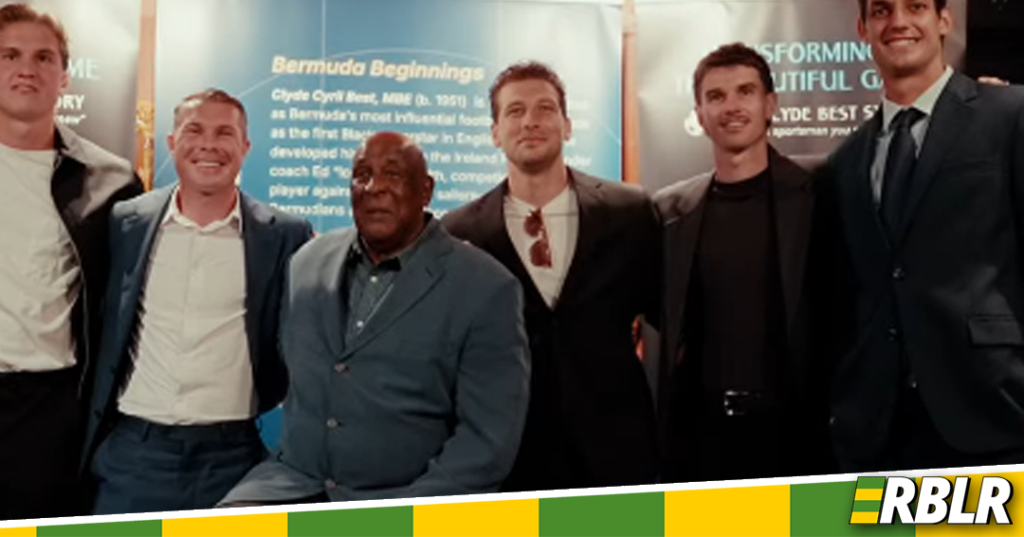
A new documentary telling the story of Clyde Best made its US debut last week in St. Petersburg, FL. The film – Transforming the Beautiful Game: The Clyde Best Story – tells the story of Clyde’s life. It covers his rise as a young footballer in Bermuda, how he made the jump and transition to the English top flight at just 17 years old, his performances and attitude that inspired the future generations of Black footballers in England and beyond, his role in growing the game in the US, and finally his eternally positive impact on those around him.
It was a story that is not as well known as it should be across the football world, and especially the local Tampa Bay soccer community, given Clyde’s importance to the Rowdies roster in their first ever season and Soccer Bowl 1975 championship. Clyde was honored during the 2025 Rowdies 50th Anniversary season for his accomplishments that season and general impact on soccer in the US during the NASL’s early days.
And while the documentary was centered on Clyde and his professional career, it also held many positive messages about life, community, and representation.
For all that Clyde accomplished in his career, he did not do it alone. His family supported and pushed him to make the move half way across the world to bet on himself and his football career. In England, his host family – the Charles’ – and teammates supported him on and off the field as he transitioned into a hostile football and social environment. The burden of carrying a torch for Black professional athletes in future generations was shared with other Caribbean and African immigrants of his generation.
There are a few things that have really stuck with me in the days since I have watched the film. The first is how impactful representation is for inspiration. The documentary featured many of Clyde’s late 1960s contemporaries and the future England greats that they inspired, including Les Ferdinand and Ian Wright to name a few. They spoke about how vital it was to have forwards like Clyde show them it was possible to not just make it to the top of the professional game but to be one of the best in their team and league. Clyde helped begin a lineage of inspiration that has continued across sports, countries, and generations to come.
The second is that while we may call soccer/football the beautiful game, it has not always been – and in many cases still is not – beautiful or fair for all who wish to enjoy it. The cast of the documentary spoke at length about what their on pitch experience was like: from having racial abuse and “monkey” chants directed at them to having hundreds of bananas hurled onto the pitch. But it was arguably the off pitch negativity that sounded more difficult to deal with. Players recounted receiving bullets and razor blades in the mail, being surrounded by mobs on the street because they ended up in the wrong part of town (both in England and the US), and an overall message that they are unwelcome or less than.
Unfortunately, in 2026 these experiences are still relevant. The experiences for Black players and players of other races have certainly improved hugely. But, players of many races are still receiving hate in the form of social media DMs and posts. Players are still being given monkey chants and being called racial slurs by opponents and fans. Just look at Vini Jr.’s experiences vs Benfica earlier this year. Or, footage of the Argentinian national team singing about the French national team in recent years. Or, the treatment of Marcus Rashford, Jadon Sancho, and Bukayo Saka following a string of penalty misses for England at the Euros. These are just some high profile examples from recent years. So, while Clyde and his generation did a lot to move the game forward there is still more for the current and future generations to do to help the game be beautiful for all, always.
The last thing that has stuck with me were some of the last words Clyde’s mother said to him before beginning his journey from Bermuda to England at 17. Be nice to others. Simple, but words that it seems Clyde has lived by since and one of the first lessons young kids are taught when growing up in the form of the “Golden Rule”. It is always nice to have a reminder of how important this message is for people to live by no matter who you are or where you are. Clyde, his family, and his soccer community embody this life lesson and inspire those around them to do the same.
Overall, it was a pleasure to attend the film screening and learn more about a lesser known football pioneer in Clyde Best. I hope others in attendance on the film’s US tour take as much away from it as I have and that fans can continue transforming the beautiful game by following the path that Clyde set out on as a young boy from Bermuda.