RBLR Rays Roundtable – 5/18/26 – Doing Things Our Way
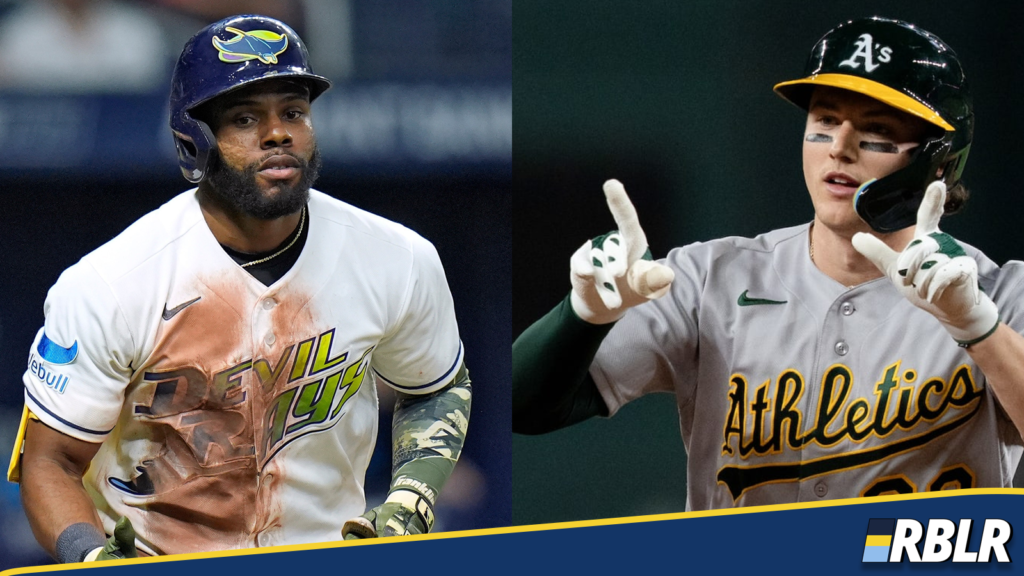
In a modern era of the “pull-heavy” revolution, the Rays are staging a quiet, contact-driven rebellion. While the rest of the league swings for the fences, the Rays are thriving by embracing the “old school” art of the spray hitter: challenging defensive shifts and causing chaos on the basepaths. As the trade deadline looms, can this unique offensive identity sustain a division lead, or will they need to inject a new spark into the lineup to secure a deep October run?
Jake Shutters (@JakeShutters) : Spraying the way to winning
There’s a reason PullAir% is the only batted ball location metric on baseball savant that’s highlighted in the leaderboards. The pull air revolution has boded well for guys like Isaac Paredes, turning sub par raw power into elite game power, but failed others, like when the Rays tried to do it with Xavier Edwards, leading to his worst season in professional baseball.
Ever since abandoning that approach and utilizing the approach he was most comfortable with, spraying the ball and getting on base, Edwards has turned into a legit everyday player for the Marlins. There’s nothing wrong with pulling the ball in the air, but it all depends on if your personnel would be better off doing so. The 2026 Rays do not have the personnel to do so with the lowest average exit velocity, hard hit rate, and barrel rate in the league, so they decided to look to an old school approach to win in modern baseball.
The Rays do not pull the baseball, even on the ground. Their 33.1% pull rate is the lowest in the league, and their 16.9 pulled in air% and 16.3 pulled ground ball% both rank in the bottom 10 in baseball, with the ladder being the lowest rate in the league.
Their straight in the air% is also one of the lowest in the league, as up the middle fly balls are usually turned into outs, especially at Tropicana Field. The Rays, with their speed and ability to cause chaos on the basepaths, are content with using the whole field to simply get on base, and stretch singles into doubles using the stolen base, bunt, or simply just making contact, which they do at an elite level.
The Rays up-the-middle and oppo ground ball % is the highest in the league, a stark contrast from the pulled ground ball rate that places last. The Rays spray the ball all over the field, making it hard to defend via defensive positioning, and are elite at getting runners on first around by any means necessary. People may complain that the Rays offense isn’t the elite offense people are used to seeing in 2026 Major League Baseball, but after years where the strikeout and pulled ball turned into outs were commonly seen in Rays offensive frames, this year has been a refreshing change, and has led to the team’s early success.
Jacob Macauley (@raysfarmreport) : A Way-Too-Early look at 2B trade options
It is far too early to begin discussion about the trading deadline, but as of now, the Rays have positioned themselves nicely. Currently, Tampa Bay holds a 2-game lead in the AL East and project to have a 94.2% chance to make the playoffs according to Pecota.
2nd base appears destined for a possible area of concern, as the Rays have only accumulated 0.4 fWAR between the primary platoon of Ben Williamson and Richie Palacios. The Jake Fraley injury also throws a wrench into the current 2B configuration, as presumably Palacios will see more time in the outfield.
One of the best fits I can find is Zack Gelof. Gelof burst onto the scene as a rookie, putting up a 130 wRC+ and 2.7 fWAR in just 300 plate appearances. Since then, Gelof has bounced between the IL, AAA affiliate, and Major League club. After reading that, why would Gelof be the guy I’d want?
It’s early, but Gelof’s approach change has done him wonders to open up 2026. Zack used to be among the most aggressive hitters in baseball (in or out of the zone) and has since dialed it back. Before the 2026 season, Gelof ran a 29% out of zone swing% (50th percentile) and a 72% zone swing% (85th percentile). He has cut each of those rates by 6% each in the early stages of 2026, and it’s doing him wonders. Gelof’s 113 wRC+ is comfortably the best mark he’s posted since his debut season, his 77% Z-Contact% is a career best at the Major League level, and his 45.2% hard hit% adds an element the Rays could certainly use.
Outside of the hit tool concerns (which even with the shift in approach remain), Gelof fits the Tampa Bay mold very well. He pairs 93rd percentile sprint speed with a career 6.6 BsR and 7 OAA at 2B. The Athletics have begun playing Zack in CF, and the early returns are strong as Gelof is covering 3.5 more feet of ground than the average center fielder.
It’s difficult to assume the price, given the fact that Gelof still has 3.5 years of club control and has had a volatile beginning to his Major League career, but as long as the price is reasonable, I think this is a perfect fit for a Tampa Bay team that could be on the lookout for CF/2B ahead the trading deadline.
The RBLR Rays Roundtable is a weekly collection of analysis, insight, and perspectives from a cast of writers assembled because of their unique backgrounds and experience. Check this space weekly for new updates and features covering the Tampa Bay Rays, the Rays’ minor league prospects, and more!